From Mike Austin: 2025 changed everything. Here’s what’s next.

2025 was the year AI got real.

For years, everyone talked about automation. This year, it started running the show.
Microsoft Copilot went from concept to cash-machine. Enterprise AI adoption exploded. Broadcom’s VMware shakeout hit budgets hard. SaaS giants quietly raised prices 5–10% across the board — Salesforce, Zoom, Atlassian, you name it.

While the market obsessed over “AI strategy,” the smartest companies did something simpler: They got control of their data — the one thing every cost, audit, and AI system depends on.

What We Saw in 2025

1. AI went from assistive to agentic.
Copilot isn’t just writing emails — it’s making entitlement changes, summarizing contracts, and creating risk. Most orgs still aren’t tracking that usage properly.
2. Prices rose — quietly, everywhere.
Vendors didn’t need more customers. They just charged more. Software inflation became real — and it’s not going away.
3. Broadcom’s VMware move shook the enterprise market.
License terms shifted. Budgets ballooned. On-prem investments shrank as everyone doubled down on cloud and AI capacity.
4. Cloud sprawl stayed. AI sprawl began.
Tools multiplied. Subscriptions scattered. Most teams can’t yet see what they’re paying for — let alone who’s using it.

What’s Coming in 2026

Agentic AI inside SAM. Tools will do the detection, reconciliation, and optimization — humans will interpret.
Audit pressure doubles. Vendors see the data we don’t; they’ll use it.
Cost control shifts from negotiation to prediction. You’ll win by knowing what’s next, not by haggling over last year’s terms.
Data quality becomes leverage. If your inventory, entitlements, and usage data aren’t aligned, your AI and your vendors will both outsmart you.

Why It Matters
The next era isn’t about who has the best tool — it’s about who has clarity.
And clarity only comes from disciplined data, consistent processes, and smart automation.
That’s what we’ve been building all year at MetrixData 360: a system that turns messy software data into confident, cost-optimized decisions.
Because in a world run by AI, clarity is your competitive edge.

A Note of Gratitude
This year tested everyone. Markets moved, vendors changed rules, and teams had to do more with less.

If you’ve partnered with us — thank you. You’ve helped shape how this industry evolves. If we haven’t yet worked together — let’s fix that in 2026.
Wishing you and your team rest, clarity, and momentum over the holidays. Here’s to doing great work — and making 2026 the year you take control.

Warmly,

Mike Austin
CEO, MetrixData 360

The Cost-Optimized ELP Method: How to Win Your Next Microsoft EA Renewal

Enterprise Agreement (EA) renewals with Microsoft are high-stakes—often involving multimillion-dollar negotiations that can shape your IT spend for the next three years or more. Yet, too many organizations walk into these renewals unprepared, relying on generic reports or outdated assumptions. The result? Overspending, audit risk, and lost leverage.

A Cost-Optimized Effective License Position (ELP) changes that. It’s not just an audit artifact—it’s your strategic weapon for negotiation, compliance, and long-term cost control.

Why the ELP Is Your Negotiation Ground Zero

Microsoft’s renewal teams start preparing months in advance—armed with their version of your licensing footprint. If you don’t control your own ELP, you’re negotiating blind.
A cost-optimized ELP flips that dynamic: you walk into the renewal with your own data-backed narrative, exposing inefficiencies, correcting vendor assumptions, and identifying 20–40% in potential savings.

1. Treat the ELP as a Negotiation Blueprint, Not an Audit Report

Traditional ELPs focus on compliance. Modern ELPs focus on optimization and leverage.
A cost-optimized ELP maps entitlements, usage, and financial exposure to real business priorities. It’s built for action, not filing.

What to include:

  • Full inventory of active, inactive, and overlapping licenses.
  • Precise reconciliation of every contract SKU, amendment, and historical purchase.
  • Scenario modeling (e.g., what if we reduce E5s, move workloads to Azure, or scale down users?).

This approach transforms your stance from reactive to proactive:

“Here’s what Microsoft says we need” → “Here’s what our business actually requires—backed by verified data.”

2. Let Data Drive Reductions, Not Vendor Expectations

Microsoft assumes your spend will grow every renewal. The smartest IT leaders use data to prove the opposite.
Identify unused licenses, duplicate services, and shadow accounts. Then trim strategically.

Pro tip: Service accounts and automation bots often hold full E5 licenses they don’t need—quick wins for instant savings.

3. Build a Forward-Looking ELP

The best ELPs anticipate change: acquisitions, cloud migrations, workforce shifts.
Model multiple 12–24 month scenarios to align license strategy with business strategy. This gives CIOs and procurement leads agility and foresight—not lock-in.

4. Find Optimization Leverage, Not Just Compliance Gaps

The real ROI comes from optimization. Evaluate:

  • License rationalization: E3 vs. E5 vs. F3
  • Add-on value: PowerAutomate, Teams Phone, or security features you can unbundle
  • Cloud entitlement strategy: Azure Hybrid Benefits, reserved instances, and cost-sharing models

Each insight strengthens your negotiation position and informs your renewal strategy.

5. Use the ELP to Win Internal Buy-In

Your CFO and leadership team don’t want tech jargon—they want validated numbers.
A cost-optimized ELP gives you defensible, board-ready documentation that demonstrates cost control, compliance diligence, and fiscal accountability.

Final Thought: Don’t Go It Alone

A well-built ELP can deliver 7-figure savings—but only if it’s done right.
Engage a specialized Microsoft licensing partner that understands both the audit and negotiation sides of the process. The investment often pays for itself many times over.

Want to know what happens when you get handed an Estimated License Position (ELP)? Watch Mike Austin’s quick video.

The Truth About SAM Service Providers: Why Independence and Data Quality Matter Most

When enterprises search for Software Asset Management (SAM) services, they’re often faced with a crowded marketplace filled with big consulting firms, resellers, niche boutiques, and software vendors. The right decision can be hard to make, given that a lot of companies sound similar. But here’s the truth: most providers are either conflicted, compliance-focused, or simply unequipped to deliver real cost savings due to limited expertise and depth of knowledge in specific areas of SAM.

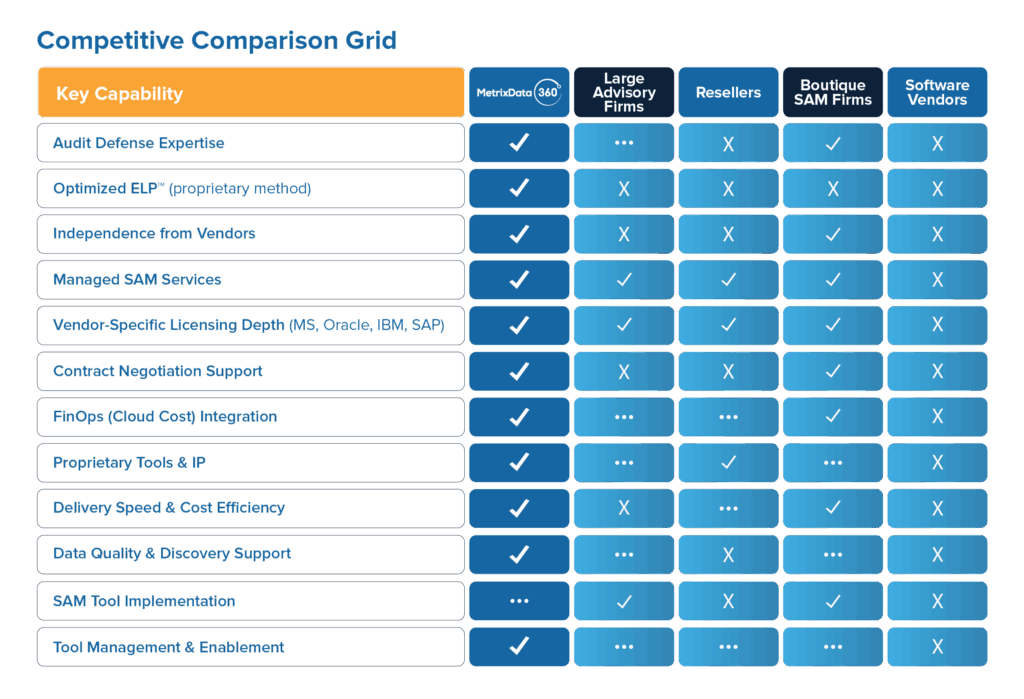
At MetrixData 360, we’ve built our reputation on being different. We created an easy-to-follow comparison grid to surface the key differences between various industry players.

Software Asset Management Best Service Providers(click here to view the full version)

The Problem with Typical SAM Providers

  • Big Four Consulting Firms: Strong brand names, but their SAM practices are built on methodologies designed for audits, not optimization. Their processes are slow, expensive, and often conflicted by vendor ties.

  • Resellers: Their revenue comes from selling more licenses — not reducing spend. Data quality is weak, and tool implementation is usually just a path to selling more software.

  • Boutique SAM Firms: Knowledgeable, but their focus leans toward compliance instead of real financial optimization. They lack proprietary processes like our Optimized ELP™.

  • Software Vendors: Directly conflicted by nature. Their role is to maximize revenue for themselves, not to minimize spend for you.

What Makes MetrixData 360 Different

Unlike the rest of the market, MetrixData 360 is 100% independent and laser-focused on savings, audit defense, and negotiation power.

Here’s how we stand apart:

  • Optimized ELP™ – Our proprietary methodology that delivers the most accurate Effective License Position possible, unlocking hidden savings others miss.
  • Audit Defense Expertise – We’ve successfully defended hundreds of enterprise audits, reducing exposure and protecting clients from overpayment.
  • Unmatched Data Quality – Our discovery process ensures accuracy at the deepest level, giving you confidence in every licensing and contract decision.
  • Vendor-Specific Depth – Microsoft, Oracle, IBM, SAP—we cover them all with expert-level knowledge.
  • Contract Negotiation Support – We advocate on your behalf to secure favorable terms, not vendor-friendly deals.
  • FinOps Integration – Cloud cost optimization for Azure and other platforms is built into our SAM services.
  • Delivery Speed & Efficiency – We deliver results faster and more cost-effectively than large consultancies or reseller-driven solutions.

The Bottom Line

If your organization is evaluating SAM solutions, audit defense strategies, or software cost optimization partners, the choice comes down to independence, data quality, and results.

MetrixData 360 delivers what others can’t: unbiased advocacy, proprietary optimization methods, and a proven track record of reducing software spend by 20–40%.

Don’t settle for conflicted providers. Choose the partner that dives deeper.

Talk to MetrixData 360 today to see how we can uncover savings and defend your business against costly audit risks.

Microsoft 365 Pricing Shake-Up: How to Prepare for the 2026 Renewal Cycle

The 2026 Microsoft renewal cycle is shaping up to be unlike anything organizations have faced before. Microsoft is eliminating tiered pricing, changing how products are bundled, and shifting negotiation tactics — all while pushing for record-breaking revenue growth.

The result? Businesses are staring down 40–50% price increases, complex new product dependencies, and a negotiation landscape that favors Microsoft, not the customer.

If your team isn’t proactively preparing now, you risk millions in overspend, reduced flexibility, and being locked into agreements that don’t serve your long-term strategy.

In this article, we’ll break down what’s changing, why it matters, and how to build a 2026 Microsoft renewal playbook that protects your budget — and your leverage.


The Rising Cost of Microsoft 365: What’s Driving the Increase

Microsoft’s current pricing changes aren’t just adjustments; they represent a fundamental shift in how organizations will buy and manage licenses.

Elimination of Price Tiers

For decades, large enterprises relied on volume-based price breaks. Now, Microsoft is removing tiered pricing altogether, leading to:

  • Major cost spikes for enterprise clients who previously benefited from large-volume discounts.
  • Silent uplifts for smaller companies who may not notice the changes until it’s too late.

Why it matters: Without early planning, your next renewal could increase by double digits — with little room to negotiate.


Hidden Complexity in Microsoft’s New Bundling Strategy

Microsoft is increasingly tying its products together, creating forced dependencies that drive costs higher. These changes are subtle but have big financial implications.

Examples of recent bundling tactics:

  • Copilot now requires a premium compliance suite before you can even enable it.
  • Power Apps rely on Microsoft Fabric for reporting, adding a new layer of spend.
  • Defender for Servers is being split into separate SKUs, charging you more for the same coverage.
  • OneDrive archive storage will soon be billed per GB, potentially ballooning costs.

The danger: These add-ons can silently inflate your total Microsoft bill if you don’t have a clear line of sight into actual usage and business value.


Why Microsoft Negotiations Will Be Harder in 2026

Microsoft’s sales approach is evolving. Large enterprises are seeing a shift away from partner advocacy and toward direct sales tactics that favor Microsoft’s bottom line.

Key trends you need to know:

  • Five-year contracts replacing traditional three-year agreements — locking you in longer.
  • Ramped-up payment schedules requiring higher upfront commitments.
  • Higher exit costs, making it more expensive to pivot away mid-term.
  • Reduced reseller involvement, leaving you to navigate complex agreements on your own.

Without a data-backed strategy, you’ll walk into negotiations at a severe disadvantage.


Data-Driven Cost Management: The Secret to Regaining Leverage

The companies that win in 2026 won’t be the ones who argue harder — they’ll be the ones with better data.

Proprietary processes and tools like our Slim 360 from MetrixData 360 can:

  • Pinpoint unused or underutilized E5 licenses and downgrade to E3 or a la carte.
  • Reveal hidden waste and redundant tools across your Microsoft ecosystem.
  • Build a clear picture of actual usage, giving you leverage in every negotiation conversation

Real-world impact: Our clients regularly uncover 20–30% in immediate savings just by gaining visibility into what they’re actually paying for — and what they don’t need.


How to Evaluate Microsoft’s New Products Without Overpaying

Microsoft will aggressively market new products like Copilot and Azure services in the run-up to 2026. Many will come with attractive early adoption discounts, but these can trap you in long-term costs that outweigh the benefits.

Best practices:

  1. Pilot before you buy — validate value with a controlled rollout.
  2. Tie investments to business outcomes, not just feature adoption.
  3. Negotiate flexibility, so you’re not stuck with expensive commitments that no longer fit your strategy.

Your 2026 Microsoft Renewal Playbook: Start Now or Pay Later

Preparing for this renewal cycle isn’t optional — it’s urgent. The earlier you start, the more leverage you’ll have. Proactive companies regularly see 15–30% savings compared to those who simply accept Microsoft’s terms.

Action steps to begin today:

  1. Start negotiations 12–18 months before renewal — not six weeks before.
  2. Conduct a full licensing health check to identify waste and savings opportunities.
  3. Benchmark EA vs. CSP models to see where flexibility and savings lie.
  4. Build a cross-functional renewal team including procurement, IT, and finance.
  5. Develop multiple negotiation scenarios to handle Microsoft’s tactics.

The MetrixData 360 Advantage: Why Go It Alone?

Microsoft’s negotiation playbook is evolving — and so should yours. At MetrixData 360, we specialize in complex Microsoft agreements, helping enterprises:

  • Navigate multi-million-dollar renewals with confidence.
  • Expose hidden waste through advanced usage analytics.
  • Build data-backed negotiation strategies that deliver measurable savings.

Our team doesn’t just manage licensing. We dive deeper than anyone else in the industry to ensure every dollar you spend drives value — not waste.


Key Takeaways

  • 40–50% price increases are coming — act now to protect your budget.
  • Microsoft is eliminating tiered pricing, hitting enterprises hardest.
  • Hidden bundling and forced dependencies can silently inflate costs.
  • Negotiations are shifting to favor Microsoft, making preparation critical.
  • Data-driven insights can unlock 20–30% savings and provide leverage.
  • The earlier you start planning, the more leverage you’ll have.

Final Word: Don’t Wait Until Renewal

By the time your renewal window opens, Microsoft will already have the upper hand. Act now to build a strategic renewal playbook, backed by data and expertise, and ensure your organization is paying only for what it truly needs — nothing more. The 2026 renewal cycle will define your Microsoft relationship for the next five years. Are you ready to fight for your budget — or will Microsoft dictate the terms?

Start with a no-obligation Microsoft Licensing Health Check to uncover hidden costs and create your customized negotiation roadmap.


Elevate Your SAM Strategy: Meet MetrixData 360 at SAMS USA 2025

Software asset management is no longer just about keeping track. With rising complexity from AI-powered tools, proliferating SaaS/IaaS, and hybrid license models, the organizations that win are those who embed strategic, proactive, and cost-focused SAM into their operations.

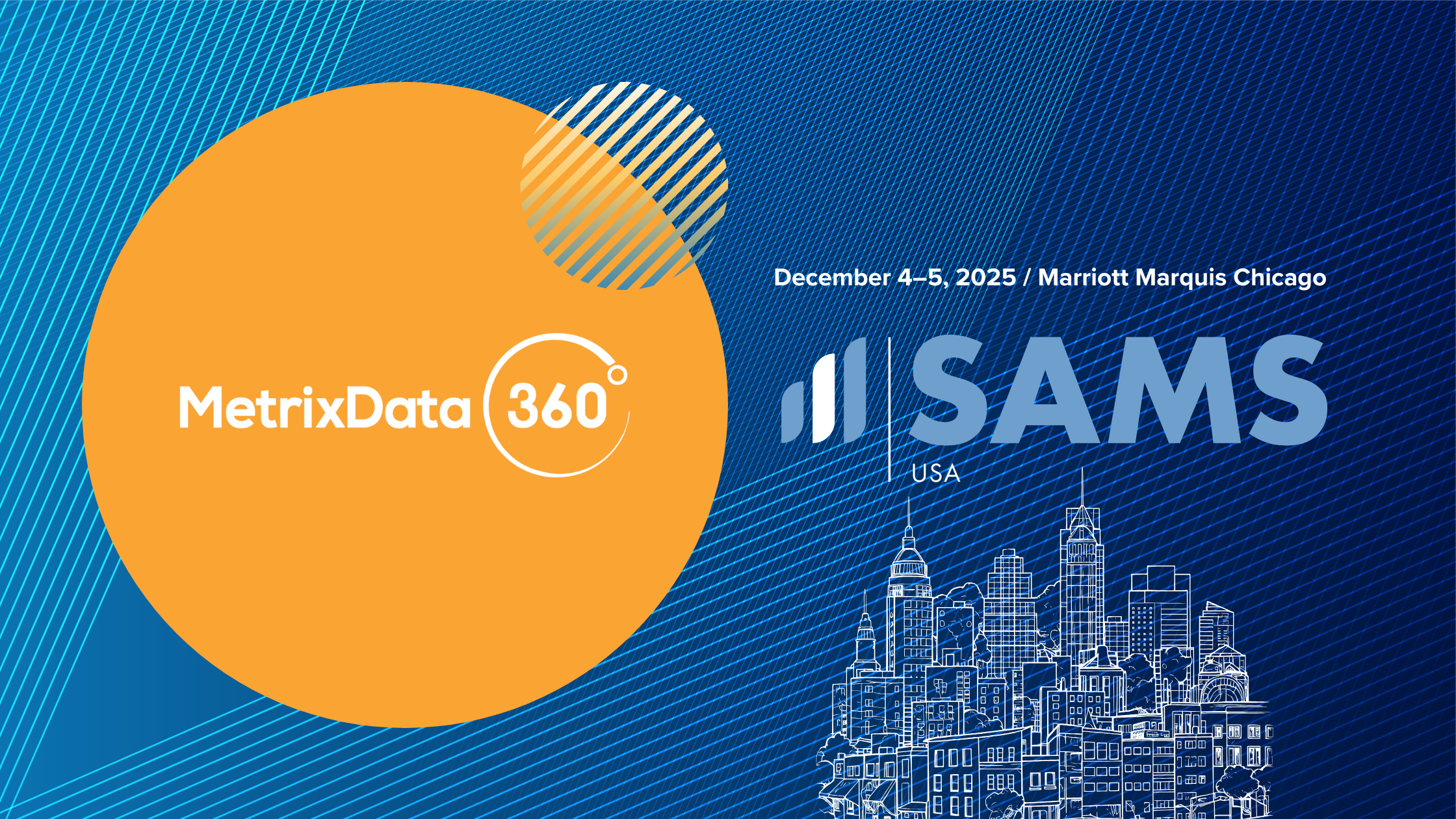
That’s why MetrixData 360 is sponsoring SAMS USA 2025, Dec 4–5, at the Marriott Marquis Chicago.

What Makes SAMS USA 2025 Critical

  • Details: December 4–5, 2025 / Marriott Marquis Chicago

  • Focus: smart strategies for cost-reduction, managing modern license models, vendor management, integrating SAM with procurement, IT security, and operations.

The agenda includes sessions like:

  • Mastering the multitude of cloud services

  • License management beyond mega-vendors

  • New cloud license models and subscription economy dynamics

  • AI-assisted license tracking & compliance

That means real-world relevance for any organization running engineering, enterprise, or R&D-heavy workloads under complex licensing regimes.

Why MetrixData 360 is Your Strategic Partner at SAMS USA 2025

MetrixData 360 isn’t just attending — we’re bringing the differentiators that help clients not only respond to complexity but thrive in it.

  • Actionable takeaways and real-world strategies — not just theory, but proven methods organizations have used to reduce their license spend by tens or even hundreds of thousands annually.

  • Enhanced data visibility and integrity — discover how to unify and clean fragmented data sources across IT, procurement, and finance to create a single source of truth for all licensing and usage decisions. This clarity empowers better planning, negotiation, and optimization.

  • Clarity on navigating complex cloud-first transitions — including engineering apps, AI add-ons, and specialty SaaS services, so you stay ahead of vendor changes and pricing shifts.

  • Networking with top SAM and IT leaders who are solving similar challenges in cost control, compliance, and operational excellence.

  • An inside look at the latest SAM tools and innovations — including our proprietary approaches to identifying hidden waste and delivering measurable ROI.


What You’ll Gain by Joining Us

  • Actionable takeaways and use cases — not theory, but how teams have reduced their license spend by hundreds of thousands and sometimes millions annually

  • Clarity on navigating cloud-first license transitions, especially for engineering tools, AI modules, and specialty apps

  • Networking with people aiming at the same goals: Mission-critical SAM programs, cost efficiencies, risk mitigation

  • Meet Mike Austin (CEO & Founder) and MetrixData 360 team in person and ask questions!

Let’s Connect in Chicago

MetrixData 360 is excited to be a partner at SAMS USA 2025. If you want a personalized conversation (e.g. on your Microsoft licensing footprint, engineering app license optimization, or audit readiness), let’s arrange a meeting. 

Come see our team at SAMS USA 2025 and leave with strategies that ensure your SAM program is not just compliant — but a source of competitive advantage.

Oracle’s AI Push: Why Their Stock Surge Could Mean Higher Costs for Your Organization

Oracle’s recent stock surge has been making headlines, showcasing the company’s successful pivot into artificial intelligence (AI), cloud infrastructure, and data platforms.

But while investors are celebrating, enterprise customers should be cautious. This surge isn’t just about Oracle’s innovation—it’s a signal that Oracle will push even harder to monetize these areas.

The result?

  • Higher licensing costs
  • More restrictive agreements
  • Aggressive sales tactics aimed at locking customers in for the long haul

If your organization relies on Oracle for databases, enterprise apps, or Oracle Cloud Infrastructure (OCI), now is the time to prepare.


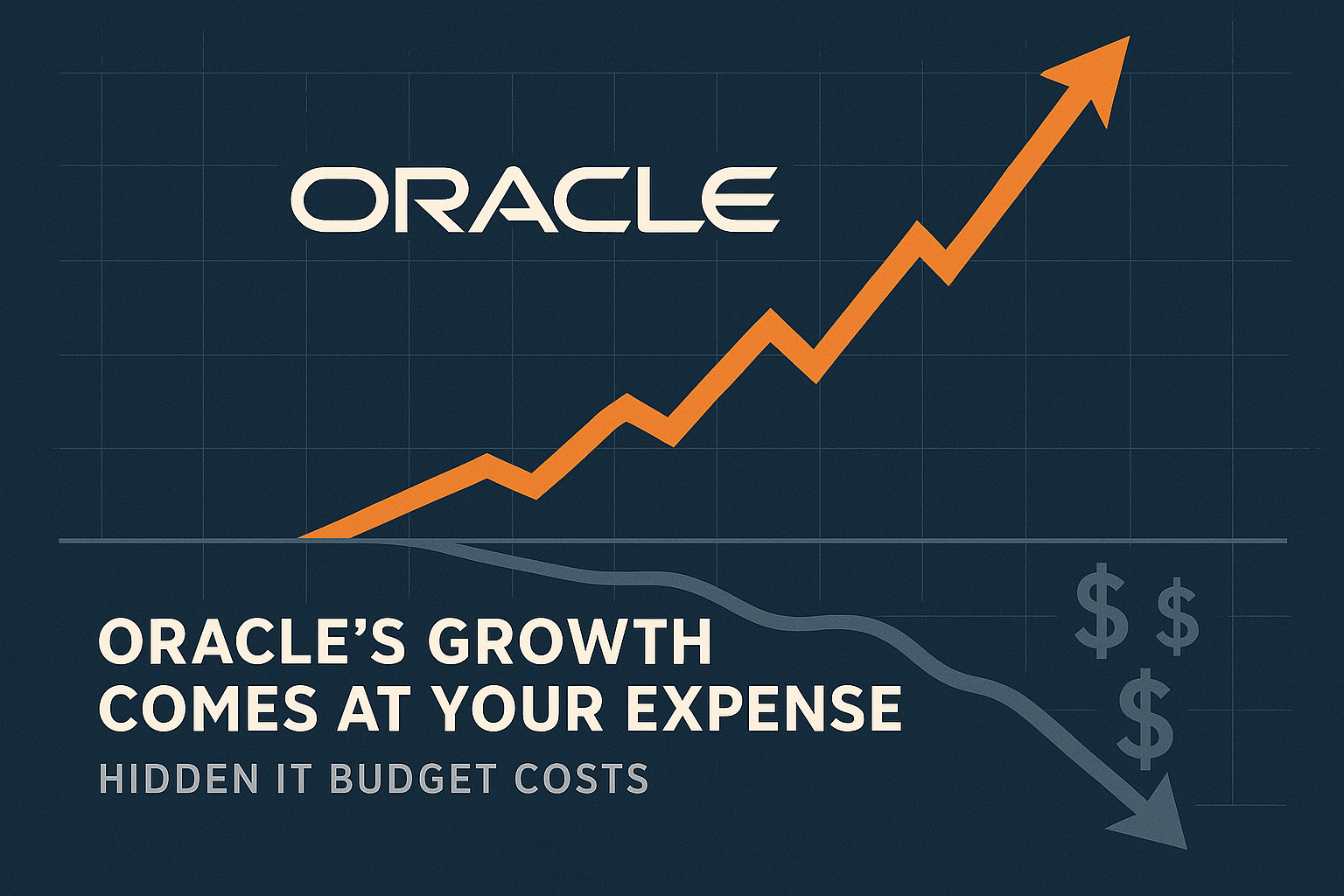
AI and Cloud Are Oracle’s Growth Engine—But at Your Expense

Oracle’s strategic focus on AI and cloud isn’t just about staying competitive. It’s about driving revenue growth. Here’s what you can expect:

  • Bundled AI features added to existing products with premium pricing
  • New AI-driven solutions introduced as must-have upgrades
  • Aggressive cloud migration pushes, particularly into OCI

While these offerings may sound cutting-edge, not every feature will bring real business value.

Ask yourself: Are these tools truly essential—or just Oracle’s way of boosting revenue?

Without a careful evaluation, you could be paying for services that don’t move the needle for your organization.


Lock-In is Oracle’s Long-Term Play

The phrase “legacy doesn’t mean slow” has never been truer. Oracle has shown that even a long-established vendor can pivot quickly when the market demands it. Unfortunately, that agility often comes at the expense of customer flexibility.

Consider Oracle’s recent shift to paid licensing for Java. Overnight, what was once free became another recurring cost for organizations worldwide.

As Oracle expands its AI and cloud services, expect:

  • Deeper product integration that makes it difficult to scale back or switch vendors
  • Restrictive licensing terms that penalize non-compliance
  • Complicated renewal structures designed to maximize Oracle’s revenue

The deeper you go into Oracle’s ecosystem, the more control Oracle gains over your IT budget and strategy.


OCI for AI Workloads: Proceed With Caution

Oracle’s AI infrastructure investments are designed to lock in enterprise customers for the long haul. If you’re evaluating OCI for AI workloads, take these steps before signing anything:

  • Negotiate from a position of strength – Don’t accept Oracle’s first offer at face value.
  • Demand clear cost models – Understand how pricing scales as usage grows.
  • Create exit strategies – Avoid being trapped if Oracle changes terms or pricing later.

The decisions you make today will shape your organization’s flexibility—and costs—for years to come.

“If you’re considering OCI for AI workloads, make sure you’re negotiating with leverage, not reacting to Oracle’s agenda.”


Pricing Pressure Is Coming

When a company’s stock jumps 128% in six months, investors expect even more growth ahead. That pressure inevitably trickles down to the customer base. Expect to see Oracle use every tool in its playbook to increase revenue, including:

  • More frequent software audits
  • Forced migrations to new subscription models
  • Aggressive renewal tactics with limited flexibility

If you’re approaching a renewal or expansion, having accurate, clean data on your current usage and entitlements is critical to negotiating effectively.


Stay Proactive, Not Reactive

The worst thing you can do is wait for Oracle to dictate the terms of engagement.

A proactive approach includes:

  • Conducting an internal audit of your Oracle environment
  • Understanding actual usage patterns versus entitlements
  • Identifying cost-saving opportunities and areas to optimize
  • Reducing or eliminating services you don’t need before Oracle upsells you

This strategy ensures you’re always ready to push back on Oracle’s pricing tactics—and avoid being surprised by hidden costs.


The Bottom Line: Don’t Fund Oracle’s Next Stock Rally

Oracle’s soaring stock is a sign of its successful pivot, but it’s also a warning sign for enterprise customers. The intersection of AI, cloud, and data platforms is where Oracle sees its future—and where you’ll encounter the most aggressive sales and licensing tactics.

If you’re not prepared, you could end up funding Oracle’s next stock surge at the expense of your own IT budget.


How MetrixData 360 Helps You Take Control

At MetrixData 360, we specialize in helping enterprise organizations navigate Oracle’s complexity while reducing costs and risk. Our team helps you:

  • Build a clear, accurate licensing picture before negotiations
  • Identify and mitigate compliance risks before audits
  • Develop strong, data-driven negotiation strategies
  • Create exit plans to avoid long-term vendor lock-in

The earlier you start, the more leverage you’ll have when Oracle comes to the table. Don’t wait until your next renewal or audit to act. Start today and negotiate from a position of strength.

Book a Consultation to protect your IT budget and ensure Oracle’s growth doesn’t come at your expense.

CIO 2030: How SAM Will Evolve (and Why It Matters Right Now)

Let me ask you a simple question: When was the last time you looked at your software asset management (SAM) strategy and thought – “This is future-proof”?

If you’re like most CIOs I’ve spoken to lately, the honest answer is never. And that’s not a knock on your team; it’s a reality check on the speed at which this industry is shifting.

We’ve moved past the days where SAM was just about staying compliant and checking boxes. In fact, if you’re still treating it like that, you’re doing your organization a disservice.

The next generation of SAM leaders, the ones who will thrive between now and 2030, are thinking about software as a strategic asset, not just a liability. And they’re using it to drive efficiency, predictability, and cost control across their IT environments.

That’s the subject I presented at the recent The American CIO & Cybersecurity Summit in San Francisco “How SAM Will Evolve” (view it here).

Here’s why this knowledge matters:

Microsoft isn’t slowing down. Copilot, Security & Compliance add-ons, and evolving EA terms are putting more pressure on budgets than ever. And behind the scenes, licensing rules are getting trickier to navigate.

AI is entering the mix. Automation is reshaping what “real-time” data means. And CIOs are being asked to do more with less, while still avoiding audit landmines and costly renewal surprises.

This isn’t theoretical. It’s happening right now.


Inside the deck, I walk through:

  • How the role of SAM is shifting from compliance policing to value creation
  •  What AI, FinOps, and automation mean for your licensing strategy
  • Why “license intelligence” is the most underutilized advantage in your IT toolkit
  • The risks most CIOs don’t see coming in their next Microsoft renewal
  • Tactical plays you can run now to defend your budget and control your EA

I’ve spent the last 15+ years helping large organizations navigate Microsoft’s licensing maze. And I can tell you — what worked five years ago won’t work in the next five.

You need better data.
You need better foresight.
And most importantly, you need to treat SAM like a business function, not a back-office chore.


If you’re a CIO thinking, “I know there’s waste in my Microsoft stack, but I don’t know where it is” — this presentation is for you.

If you’ve got an EA renewal coming in the next 18 months — it’s definitely for you.

👉 Download the presentation here and take 15 minutes to get ahead of the curve.

Your future self (and your CFO) will thank you.

Microsoft 365 vs Office 365 in 2025: What’s the Difference?

Let’s clear something up, because the confusion still lingers, even in 2025. I’ve sat in more than a few boardrooms where IT and procurement teams are using “Office 365” “O365” and “Microsoft 365” interchangeably. And in some cases, they’re making six- or seven-figure licensing decisions without actually knowing the difference.

Here’s the reality: Microsoft 365 and Office 365 are not the same. Not in capabilities. Not in cost. And certainly not in value.

Let’s break it down — without the fluff.

Office 365: The Productivity Engine

Office 365 is exactly what you think of when someone says “Word, Excel, Outlook, and Teams.” It’s the productivity stack — your email, your collaboration tools, your spreadsheets and presentations. That’s it.

You get cloud-based versions of those apps and different licensing options depending on whether you’re SMB, enterprise, education, or government. It’s great if your needs stop at basic productivity and communication.

But that’s where it ends.


Microsoft 365: The Full Ecosystem

Microsoft 365 is a different beast entirely. It includes everything in Office 365—plus:

  • A license for Windows 10/11 Enterprise

  • Enterprise Mobility + Security (EMS)—Intune, Conditional Access, Azure AD Premium

  • Microsoft Defender

  • And as of 2024/2025? Copilot AI is fully baked in to nearly every tool

It’s not just a license bundle. It’s a shift in strategy. Microsoft 365 is about control, compliance, security, and now also AI-driven productivity.

If Office 365 is the engine, Microsoft 365 is the entire vehicle.

Why the Confusion Still Exists

Let me be blunt: Microsoft hasn’t made it easy. Between name changes, bundle tweaks, pricing changes, and Teams being unbundled in some regions, it’s no wonder IT leaders are still asking, “Wait, what are we actually paying for?”

And with the Copilot rollout in full swing, the lines have blurred even more. Microsoft is upselling Copilot as part of Microsoft 365 (not Office 365), and that’s where many organizations are getting caught flat-footed: either under-licensed or overpaying for the wrong stack.


What Really Sets Microsoft 365 Apart in 2025

1. Security and Compliance Built In

Microsoft 365 includes features most companies are now being forced to care about: zero trust enforcement, conditional access, insider risk management, DLP. If you’re still managing those with third-party tools, you’re either overcomplicating things or overspending. Sometimes both.

2. Device & Identity Management

With Intune and Azure AD Premium, you can manage mobile devices, laptops, and users without a Frankenstein mix of tools. Centralized, policy-driven control. That’s what CIOs need, especially in global environments.

3. AI as a Feature, Not a Gimmick

Let’s talk about Copilot. It’s not just autocomplete for Excel formulas. It’s writing draft emails, generating slides, summarizing Teams calls, and surfacing trends from SharePoint data — all in real time. And it’s only available (natively) in Microsoft 365.


So, What Should You Buy?

Ask yourself this:

  • Do you just need productivity tools? That’s Office 365.

  • Or do you need endpoint protection, identity management, secure remote work, and AI-powered productivity? That’s Microsoft 365.

Most mid-to-large enterprises? They’re either already on Microsoft 365 or in the process of justifying the move. And if they’re not, they’re either overpaying for third-party solutions or flying blind on security.


Final Thought

Microsoft 365 isn’t just a licensing SKU. It’s a platform for control. For optimization. For security. And now, for AI.

If you’re unsure where you stand, or if your Microsoft estate is a black box, we should talk.

Because the difference between Office 365 and Microsoft 365? It’s more than branding. It’s the difference between keeping up and being left behind.

CIO Chronicles: Challenging Our Microsoft Renewal

“I wish we had internal data to challenge Microsoft’s numbers instead of relying on their narrative.”

That thought echoed in my mind as I stared at the EA renewal proposal sitting on my desk. More accurately, lurking like a wolf in sheep’s clothing. It wasn’t just the numbers that bothered me. It was the fact that I couldn’t confidently tell my executive team whether they were accurate… or inflated.

I’m Ethan Keller, CIO of VirelliTech, a global industrial automation firm with just over 12,000 employees. We’re a company known for engineering precision and operational efficiency—but when it comes to software licensing, especially Microsoft, our house has been… less than in order.

The Internal Reckoning
A few weeks ago, I pulled together my IT ops director, our procurement lead, and a couple of folks from finance to ask one simple question:
“Do we actually know how many Microsoft licenses we’re using — and how many we actually need?”

Silence. Then the usual dance:

Procurement shrugged: “We go by what Microsoft tells us.”
Finance asked: “Isn’t that in the SAM tool?”
IT said: “Which SAM tool are we talking about? We’ve got ServiceNow, but it’s not fully implemented.”
And everyone turned toward my SAM lead… who left the company six months ago and hadn’t been replaced.

That’s when the reality hit me.
We had fragments of data — procurement records here, spreadsheets there, telemetry that may or may not be tied to active users — but nothing coherent. And yet, Microsoft was asking us to sign off on a 3-year agreement with a 22% cost increase and only vague assurances about “value realization.”

Microsoft’s Narrative Is Always Ready
Microsoft doesn’t wait for you to get your house in order. Their EA renewal account team came prepared. PowerPoints, charts, “business value assessments,” and usage stats that—let’s be honest—made us look underlicensed, underutilized, and underinformed.
But here’s the kicker: I knew some of their claims didn’t line up with reality.
For instance, they said Teams usage was “skyrocketing” across the company, but I’ve had two senior managers tell me their divisions still use Slack and WebEx. They claimed our Defender deployment was near-complete. It wasn’t. We were piloting it in just one region. So I sat there, stuck between a vendor who had all the leverage—and an internal team that couldn’t give me a clean, confident alternative narrative.

Enter MetrixData 360
That’s when our CFO — who had worked with MetrixData 360 at her previous company — pulled me aside and said: “You don’t have to do this alone. Get someone in the room who can tell our story — backed by our data.We brought in the MetrixData 360 team that same week.

They didn’t start with Microsoft. They started with us. They dug into our Active Directory data, matched it with usage telemetry, crawled our CMDB, reviewed our contracts, and helped us map out an actual license inventory. Within a month, we had a complete, validated picture of what we had, what we were using, and what we truly needed.

They identified over 1,300 E5 licenses that could be downgraded. We were double-counting SQL Server entitlements. And our supposed “under-deployment” of Defender? It was already deployed across three regions—just not reporting correctly in Microsoft’s dashboards.

The Power Shift
For the first time, we walked into the negotiation not with questions—but with answers. Our answers.
And when Microsoft’s team tried to steer the conversation with their usual assumptions, we didn’t push back emotionally. We pushed back with evidence.
I felt like a CIO again—not a customer trying to catch up to a vendor’s story.

The Lesson
We talk a lot about digital transformation and owning your tech stack — but no one tells you that if you don’t own your data, someone else will. In this case, Microsoft was more than happy to tell our story for us — until MetrixData 360 helped us tell it better.

I still think about that moment in my office:
“I wish we had internal data to challenge Microsoft’s numbers.”
Now, we do. And I’ll never go into another renewal without it. You shouldn’t either.

Renew your Microsoft EA Agreement With Confidence and Precise Data. Let’s Connect Today.

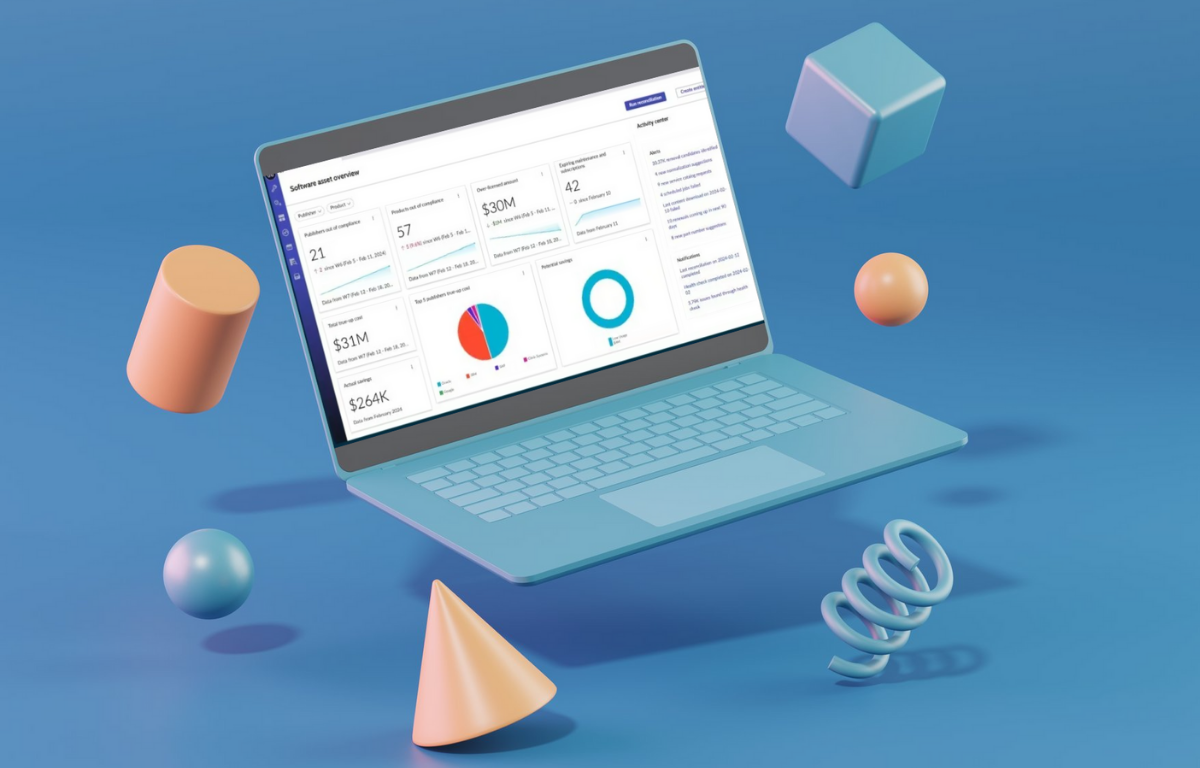
ServiceNow SAM Pro Implementation: Success Strategies

Successful ServiceNow SAM Pro implementation can fail to deliver real value if not done correctly. ServiceNow’s SAM Pro module promises to streamline software asset management, compliance, and cost optimization, but many organizations find it complex to implement and difficult to operationalize effectively.

If you’re deploying ServiceNow SAM Pro or looking to optimize an existing implementation, these five expert strategies will help you avoid common pitfalls, maximize accuracy, and drive real ROI.

Tip 1: Ensure Your CMDB Is Clean and Complete

The biggest mistake organizations make? Feeding SAM Pro with bad data.

ServiceNow SAM Pro relies on the Configuration Management Database (CMDB) to track IT assets, software installations, and entitlements. If your CMDB is incomplete or inaccurate, SAM Pro will produce unreliable compliance reports.

How to Fix This:

  • Audit your CMDB before implementation—identify and resolve missing or duplicate software/hardware records.
  • Standardize naming conventions—ensure software titles, versions, and entitlements match vendor naming.
  • Integrate multiple discovery sources—ServiceNow Discovery, SCCM, JAMF, ILMT (for IBM), and others should feed into your CMDB.
  • Implement data validation rules—set up automatic checks for missing or outdated data.

🎯 Pro Tip: A clean CMDB can reduce compliance gaps by up to 30% and significantly improve true-up negotiations with software vendors.

Tip 2: Align SAM Pro with Your ITSM & Procurement Processes

Software Asset Management isn’t just about compliance—it should be part of your entire IT ecosystem.

SAM Pro is most effective when integrated with IT Service Management (ITSM) and procurement workflows. This ensures:

✔ Software requests go through proper approval workflows (avoiding unapproved installations).

✔ License reclamation happens automatically when users leave or change roles.

✔ New purchases are recorded in SAM Pro immediately (preventing redundant license buys).

How to Fix This:

  • Map your software procurement lifecycle—ensure every new purchase flows through SAM Pro.
  • Enable automated license assignment & reclamation—so unused software is reallocated before buying more.
  • Link SAM Pro to IT Change Management—flag high-risk software changes for review (especially for costly or compliance-sensitive vendors).
  • Integrate with contract management—so renewal dates trigger optimization reviews before auto-renewals kick in.

🎯 Pro Tip: Organizations that integrate SAM Pro with ServiceNow ITSM reduce software spend by 15-25% through better visibility and control.

Tip 3: Optimize License Entitlement & Compliance Settings

If SAM Pro isn’t showing compliance risks or savings opportunities, your entitlement data is probably incomplete.

To ensure accurate compliance tracking, licenses must be configured correctly within SAM Pro’s Publisher Packs for vendors like Microsoft, Oracle, IBM, Adobe, and SAP.

How to Fix This:

  • Load all historical license purchases—including volume license agreements, perpetual entitlements, and SaaS subscriptions.
  • Ensure correct license metric definitions—match entitlements to Microsoft CALs, Oracle Processor licenses, IBM PVUs, etc.
  • Configure downgrade & upgrade rights—to avoid unnecessary license purchases when older versions are available.
  • Enable automated alerts for compliance risks—set up thresholds for over-deployment or unassigned licenses.

🎯 Pro Tip: Regularly reconciling entitlements vs. deployments can prevent audit penalties and reduce overspending by millions annually.

Tip 4: Automate License Reclamation & Cost-Saving Actions

Your SAM tool should actively reduce costs—not just generate reports.

Many organizations manually analyze software usage, but SAM Pro can automate cost-saving actions like:

✔ Reclaiming unused software—freeing up licenses for reassignment instead of purchasing new ones.

✔ Flagging SaaS subscriptions for downgrade—avoiding premium licenses for light users.

✔ Identifying shadow IT spend—integrating with SaaS Management to find unauthorized software expenses.

How to Fix This:

  • Set up automated reclaim rules—for applications like Microsoft 365, Adobe, Visio, Project, and expensive SaaS tools.
  • Enable notifications before renewals—so procurement can optimize contracts instead of auto-renewing excess licenses.
  • Automate “least privilege” assignments—ensuring users only get the licenses they need (e.g., Microsoft E3 vs. E5).

🎯 Pro Tip: Automating software reclaim policies can reduce unnecessary software purchases by 20-30% per year.

Tip 5: Continuously Optimize & Validate Your Data

ServiceNow SAM Pro is not a “set it and forget it” tool—it needs continuous tuning to stay effective.

Licensing rules, vendor agreements, and IT environments constantly change, and SAM Pro needs to keep up. Organizations that fail to maintain their SAM tool often end up overpaying for software they don’t use.

How to Fix This:

  • Conduct quarterly license optimization reviews—analyze usage trends and identify new savings opportunities.
  • Validate compliance reports before vendor audits—ensure data is audit-ready and reflects real usage.
  • Monitor integrations with ITSM and CMDB—to catch missing software discovery data.
  • Stay updated on vendor licensing changes—especially for Microsoft, Oracle, IBM, and Adobe, which frequently update contract terms.

🎯 Pro Tip: Organizations that proactively optimize SAM Pro every quarter see 40% fewer compliance gaps and consistently negotiate lower renewal costs.

Final Thoughts: Maximize ROI from ServiceNow SAM Pro

Implementing ServiceNow SAM Pro is a powerful step toward cost control and compliance, but getting it right takes expertise.

By following these five key steps, your organization can:

✔ Reduce software waste through automated license reclamation

✔ Ensure compliance with precise entitlement & vendor tracking

✔ Prevent costly audits by continuously validating software usage

✔ Improve IT & procurement efficiency with seamless SAM integration

MetrixData 360’s team specializes in SAM tool implementation, optimization, and managed services—helping organizations maximize ROI from their ServiceNow SAM Pro investment.

Reach out today for a SAM Pro health check and discover hidden savings in your software environment.

Get Expert Help with ServiceNow SAM Pro Optimization